


Women Shoes
What is Women Shoes?
When it comes to fashion choices, few things make more of a statement than your shoes. But finding the right pair can be a challenge. There’s a wide variety of shoe styles for women to explore, each with its own identity and history. All are known for being desirable, beautiful and functional in equal measure.
Advantages of Women Shoes
Enhanced productivity
Wearing comfortable shoes can improve your functionality in the workplace. When you are comfortable, you feel more relaxed, focused, less fatigued, and more productive.
Improved posture
Wearing comfortable shoes provides the right support, which improves your body's posture. Proper alignment of the body prevents back pain and spine problems.
Reduced risk of injury
Proper footwear can reduce the risk of work-related accidents like slips, trips, and falls. Comfortable shoes with good traction could help prevent slipping and tripping on wet or uneven surfaces.
Reduced fatigue
Uncomfortable shoes cause fatigue, which wears you out. Comfortable shoes with cushions or insoles disperse the pressure on your feet, reducing fatigue and improving comfort levels.
-
![Women's Beige Lace Up Sneakers]() Women's Beige Lace Up SneakersRead More
Women's Beige Lace Up SneakersRead MoreItem: Women's Beige lace up sneakersMaterial: Microfiber + CanvasColor:Beige,color can be customized . Size: 36-41#. MOQ: 1200 PRS. Outsole: Injection. Packing: Box/Polybag
-
![Women's Beige Sneakers]() Women's Beige SneakersRead More
Women's Beige SneakersRead MoreItem: Women's Beige sneakersMaterial: MicrofiberColor:Beige,color can be customized . Size: 36-41#. MOQ: 1200 PRS. Outsole: Injection. Packing: Box/Polybag
-
![Women's Pink Sneakers]() Women's Pink SneakersRead More
Women's Pink SneakersRead MoreItem: Women's pink sneakersMaterial: MicrofiberColor:Pink,color can be customized . Size: 36-41#. MOQ: 1200 PRS. Outsole: Injection. Packing: Box/Polybag
-
![Fashion Trend Women's Low Sneakers]() Fashion Trend Women's Low SneakersRead More
Fashion Trend Women's Low SneakersRead MoreItem: Fashion Trend Women's low SneakersMaterial: Mesh + PUColor:Brown Silver . Size: 36-41#. MOQ: 1200 PRS. Outsole: Injection. Packing: Box/Polybag
-
![Women's Fashion High Cut Sneaker]() Women's Fashion High Cut SneakerRead More
Women's Fashion High Cut SneakerRead MoreItem: Women's Fashion high cut SneakerMaterial: PU+MeshColor:Multi. Size: 36-41#. MOQ: 1200 PRS. Outsole: Injection. Packing: Box/Polybag
-
![Women's New Fashion Sports Sneaker]() Women's New Fashion Sports SneakerRead More
Women's New Fashion Sports SneakerRead MoreItem: Women's new fashion sports SneakerMaterial: PU+SuedeColor:Brown Beige. Size: 36-41#. MOQ: 1200 PRS. Outsole: Injection. Packing: Box/Polybag
-
![Women's New Black Sports Sneaker]() Women's New Black Sports SneakerRead More
Women's New Black Sports SneakerRead MoreItem: Women's new black sports SneakerMaterial: PU+SuedeColor:Black. Size: 36-41#. MOQ: 1200 PRS. Outsole: Injection. Packing: Box/Polybag
-
![Women's Low Cut Sneaker]() Women's Low Cut SneakerRead More
Women's Low Cut SneakerRead MoreItem: Women's low cut SneakerMaterial: PUColor:Black Brown. Size: 36-41#. MOQ: 1200 PRS. Outsole: Injection. Packing: Box/Polybag
-
![Women's White Low Cut Sneaker]() Women's White Low Cut SneakerRead More
Women's White Low Cut SneakerRead MoreItem: Women's white low cut SneakerMaterial: PUColor:White. Size: 36-41#. MOQ: 1200 PRS. Outsole: Injection. Packing: Box/Polybag
-
![Women's New Sports Sneaker]() Women's New Sports SneakerRead More
Women's New Sports SneakerRead MoreItem: Women's new Sports SneakerMaterial: Mesh + PUColor:Black Beige. Size: 36-41#. MOQ: 1200 PRS. Outsole: Injection. Packing: Box/Polybag
-
![Women's Silver Sports Sneaker]() Women's Silver Sports SneakerRead More
Women's Silver Sports SneakerRead MoreItem: Women's silver sports SneakerMaterial: Mesh + PUColor:Silver. Size: 36-41#. MOQ: 1200 PRS. Outsole: Injection. Packing: Box/Polybag
-
![Women's Shining Stones Sneakers]() Women's Shining Stones SneakersRead More
Women's Shining Stones SneakersRead MoreItem: Women's shining stones sneakersMaterial: Mesh + PUColor:Black purple beige. Size: 36-41#. MOQ: 1200 PRS. Outsole: Injection. Packing: Box/Polybag


Why Choose Us
Our factory
Ruian supercon import & export co.,ltd established in 2019.And it was located in ruian, wenzhou city which is a famous canvas shoes industrial base.
Rich experience
With rich experienced workers here,most of us work for shoes for more than 10 years and we all like this production.
One-stop solution
Here we not only provide you variety of shoes, more service and solutions,we would like to discuss, share our ideas with our customers together.
High quality
Our products are manufactured or executed to very high standards, using the finest materials and manufacturing processes.
Types of Women Shoes
Lace-up sneakers
Lace-up sneakers are the most common sneakers you’ll find in stores and on women’s feet. As the name suggests, they come with shoelaces that keep the shoes snug on your feet.
Slip-on sneakers
If you find tying shoelaces time-consuming for your busy lifestyle, then slip-on sneakers are perfect for you. Low and laceless shoes are easy to wear and slip on easily thanks to elastics stitched into the sides.
Running shoes
True to its name, classic running shoes are great for running – professionally or otherwise. Their cushioning technology can keep your feet comfy – even if you’re running quite a distance, or just walking to the grocery store.
Slide sandals
Also known as slides, this type of footwear is the epitome of casual style. This women’s shoe style is ‘backless’ and open-toed.There can be a number of straps or just one. Slide sandals date back to several millennia, with the ancient romans proudly sporting them on their feet.
Gladiator sandals
Aka greek sandals – were originally created for ancient roman soldiers and gladiators. They originated as flat sandals composed of various straps that wrap around the foot, ankle and sometimes up around the calves.
Flip-flops
Summer wouldn’t be complete without flip-flops! This (usually) flat footwear – held by a y-shaped toe thong and aka also called “thong sandals” – is another style that draws inspiration from ancient times. Fun fact: Did you know that flip-flops are believed to be the oldest type of footwear? Yep, ancient egyptians were wearing them as early as 4000 bc!
Jelly shoes
While its exact beginnings are unknown, they are said to be created during the second world war. Because of a leather shortage, a french shoemaker had to use plastic. The rest, of course, is jelly shoe history.
Materials Used in Women Shoes
Leather
Leather is the star material in our footwear, as it offers exceptional quality with unique properties. This material is the most used in the elaboration of shoes because it offers a great resistance, it is durable, flexible, and there are different types, colours, and with different prices. It is a great material with which you can make attractive, functional and fashionable footwear. The leather can be of different kinds, which also affects the qualities that the shoe will have, for example, a thin leather breathes more and adapts like no other shoe.
Textile fabrics
Textile fabrics for footwear provide different qualities to the shoe and have a variety of properties, such as different colours, weaves, fibres and denier. The denier is the equivalent of the weight of the yarn where 1 denier = 1 gram per 9,000 linear metres of yarn. This type of material is used for lighter, more flexible and comfortable footwear, such as sports or casual shoes. These textiles come in many types of fibres, such as cotton, nylon, wool, polyester, lycra, polypropylene, etc. Each of these brings a different property and appearance.
Synthetics
This material is called by many names, from synthetic leather, leatherette, pu, pvc, or vegan leather, etc., and is a material also widely used in the design of modern sports footwear. Synthetic leather made of high-quality pu is manufactured with a water-resistant pu microfibre base. Nowadays, in order to be able to design shoes, it is necessary to have knowledge of synthetic materials, as this offers us as designers a great variety of textures, different characteristics, colours, etc. Synthetic fabrics are materials that can be reused and recycled, so if you are looking for a sustainable shoe that gives you great comfort, this type of material is the one you are looking for. Discover our commitment to the environment and how we support sustainability.
Foam
Foam is another essential material in the manufacture of footwear, as it is one of the materials that also provides unique properties. There are many types of foam, generally we can find two:Open cell foam: The plastic compounds that form the foam cells are open, air and water interfere freely, thus providing the footwear with great breathability and ventilation. This foam is available in different densities, and in almost any thickness and colour.
Closed cell foam
The individual cells are closed or sealed, and do not allow the internal foam gas to escape. The midsoles of sports shoes are made of this type of foam. The most common foams of this type are eva (ethylene vinyl acetate), pe (polyethylene), sbr (styrene butadiene rubber), pu (polyurethane), latex and neoprene. Each has different qualities, e.G. Eva foam is used to reinforce materials made with mesh for waterproofing. On the other hand, sbr and neoprene are used when a more elastic footwear is required, while latex is used to cover the shoe’s upper or to cover the neckline.
Components of Women Shoes

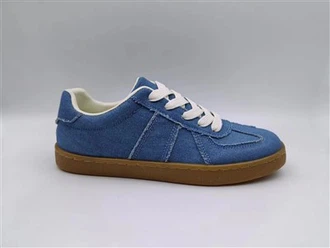


Toe cap
A toe cap is a box-like strip covering the . It is the most visible part of the shoe and has great influence on its design and style. In addition, it gives the shoe a defining structure as well as offer extra protection against sharp hazards.
Eyestay
Eyestay, or lace stay, is the part of a shoe that houses the eyelets. There are two eyestays in laced shoes, each running along the length of the shoe on opposite sides of the shoe. Eyestays serve as reinforcement around the eyelet holes – where shoelaces are threaded through.
Tongue
The tongue is a soft, lightly padded strip that sits on top of the foot's arch. It runs from the vamp to the shoe's throat and looks much like, well, the tongue. Tongues are found on shoes with laces and serve to protect the top of the foot and keep the laces from rubbing against the foot. They may be padded for extra comfort or be thin, as seen in dress shoes. Again, the tongues may have flaps or slits that let you thread your laces through to hold them in place.
Heel tab
The heel tab, or achilles tab as it's commonly referred to, extends above the heel counter and protects the achilles tendon. It cradles the shoe comfortably and firmly around the heel.
Heel counter
The heel counter is a little plastic, thermoplastic, or rubber insert that reinforces the heel cup of a shoe and offers extra support. It sits at the back of the shoe where the heel bone rests and offers stability to the foot while ensuring longevity to the shoe.
Outer sole
Also known as the outsole, the outer sole is the outermost part of the shoe that comes in contact with the ground. It's designed to provide shoes with the necessary protection and traction from the surface they will be in contact with.
Midsole
The midsole is the middle part of the shoe. It's sandwiched between the insole and outsole. A well-designed midsole can offer ample cushioning, flex support, and shock absorption, all of which are essential in ensuring your comfort and leg health. Midsoles are mostly made of rubber or leather. Shoes like racing flats have a thin midsole, while others like running shoes have a thick midsole.
Foxing
Foxing is a band that makes the sidewall of the shoe sole. It's separate from the upper and sole that secures the joint where the upper and sole meet. It's mostly used on sneakers to reinforce the application of the sole to the upper. Foxing has to be molded or applied at the sole, overlapping the upper, and spanning right around the shoe.
Shoe heel
The shoe heel is attached to the rear end of the sole. It elevates the back half of the foot to offer adequate support. The heel comprises of two main parts of the shoe: The heel seat, which is the upper part that's shaped like the shoe, and the top piece, which is the lower part that touches the ground.
Insole
The insole, also called the inner sole or footbed, is the inner part of the shoe that sits on top of the midsole and supports the bottom of the foot. Since it is removable, it’s easy to replace. The inner sole attaches to the upper part of the shoe and is made of synthetic insole board or cellulose paperboard.
Choosing Appropriate Footwear for Special Occasions
Weddings
Choose stylish and comfortable footwear for long weddings. Opt for comfortable pumps with low to medium heels or dressy sandals with extra padding. Avoid stilettos for outdoor weddings and prioritise shoes with a thicker midsole and a roomier toe box for better stability.
Formal parties
Choose shoes that complement both your outfit and the event's setting. Simple sandals with straps or embellished heels work well. Adding a block heel for extra support is advisable. Look for shoes with ankle support and a cushioned footbed for dancing or prolonged standing.
Business meetings
Select professional and conservative shoes that complement your business attire, such as loafers, low heels, or ballet flats in neutral colours. Prioritise comfort, especially for lengthy meetings, by opting for shoes with arch support and a padded insole.
Job interviews
Make a positive first impression with well-kept, workplace-appropriate black, navy, or neutral-coloured shoes. Ensure they are clean and comfortable for walking, especially if you're unfamiliar with the interview location.
Outdoor events
Consider the event's dress code and terrain. Opt for wedges, flat sandals for grass or uneven ground, and sneakers or boots for casual outdoor gatherings. Ensure the footwear provides sufficient protection and support for outdoor use.
Cocktail parties
Complement your ensemble with fashionable footwear like high-heeled sandals or pumps in bright colours or interesting designs. If you are not accustomed to high heels, choose a lower heel or a style with a platform for added comfort.
How to Maintain Women Shoes
Storing your shoes properly
It’s important to store your shoes in a way that won’t damage them and will keep them looking like new. First, make sure the area you store your shoes in is free from dust and dirt. Once you’ve chosen an appropriate place for storage, avoid stuffing multiple pairs of shoes into one box, as this can cause damage and wear down the material faster. Try not to pile heavy items on top of shoe boxes, as this could lead to misshaping and damage.
Cleaning your shoes
The type of shoe you own will determine how often you should clean them, but regardless of what kind of shoe it is, cleaning regularly goes a long way in preserving the life of your footwear. For leather or suede materials, use a soft cloth with warm water and mild soap to gently wipe away any dirt or grime that has accumulated over time.
If there are any stains on leather materials, try using a dry brush or cream-based cleaner before using water. If the stain persists after trying these methods, then take your shoe to a professional cleaner as soon as possible so they can clean it thoroughly without causing any further damage. Women’s work shoes can get dirty quickly, so make sure to check them often and give them a quick wipe down if necessary!
Protecting your shoes
To protect your shoes against moisture and weather elements like snow or rain, try using waterproofing sprays which can help repel water while also adding shine to the material. Just make sure you follow instructions carefully when applying these sprays, as over-application could cause discolouration or stiffening of the material over time.
For extra protection against dirt and grime, try investing in some scotchguard – this creates an invisible shield over materials like leather or suede, which helps prevent dirt from settling into the fabric fibres; allowing for easier cleaning later on down the line.
FAQ
We're professional women shoes manufacturers and suppliers in China, specialized in providing high quality customized products. We warmly welcome you to buy or wholesale the newest women shoes at competitive price from our factory.